








The Story
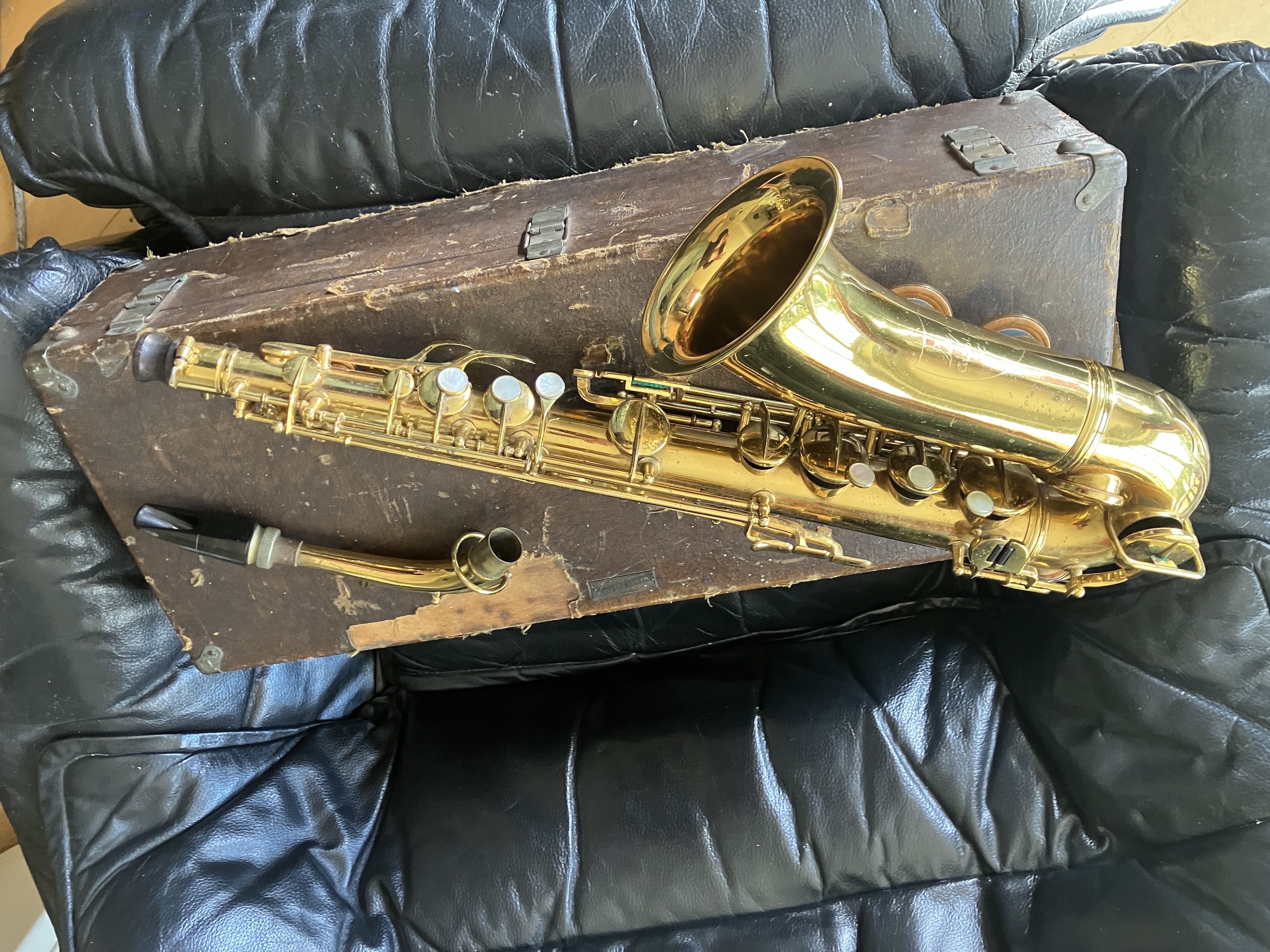
Unpacking my latest ebay purchase raised lots of questions – including who made it, when, why it lacks a middle Bb key and what’s going on with the mouthpiece. This one’s a bit of an enigma and I’m sure some of my clever readers will be able to correct my assumptions (as always!).
The case is marked ‘Henri Selmer & Co. Ltd. 12, Moor St., London, W1’. Ben (saxophone) and Lew (trombone) Davis were jazz musicians – both playing for a time in Jack Hylton’s orchestra. Ben set up Selmer UK in 1929. Selmer France then, as now, was considered by many as the best saxophone maker in the world; a reputation enhanced by its acquisition of Adolphe Sax’s business in 1928. Despite the UK company’s name, Ben’s was trader rather than maker; his company was not exclusively tied to Selmer France, importing saxophones from a number of other European makers – later giving some the Pensylvannia Special name. They also supplied numerous other musical instruments and even amplifiers.
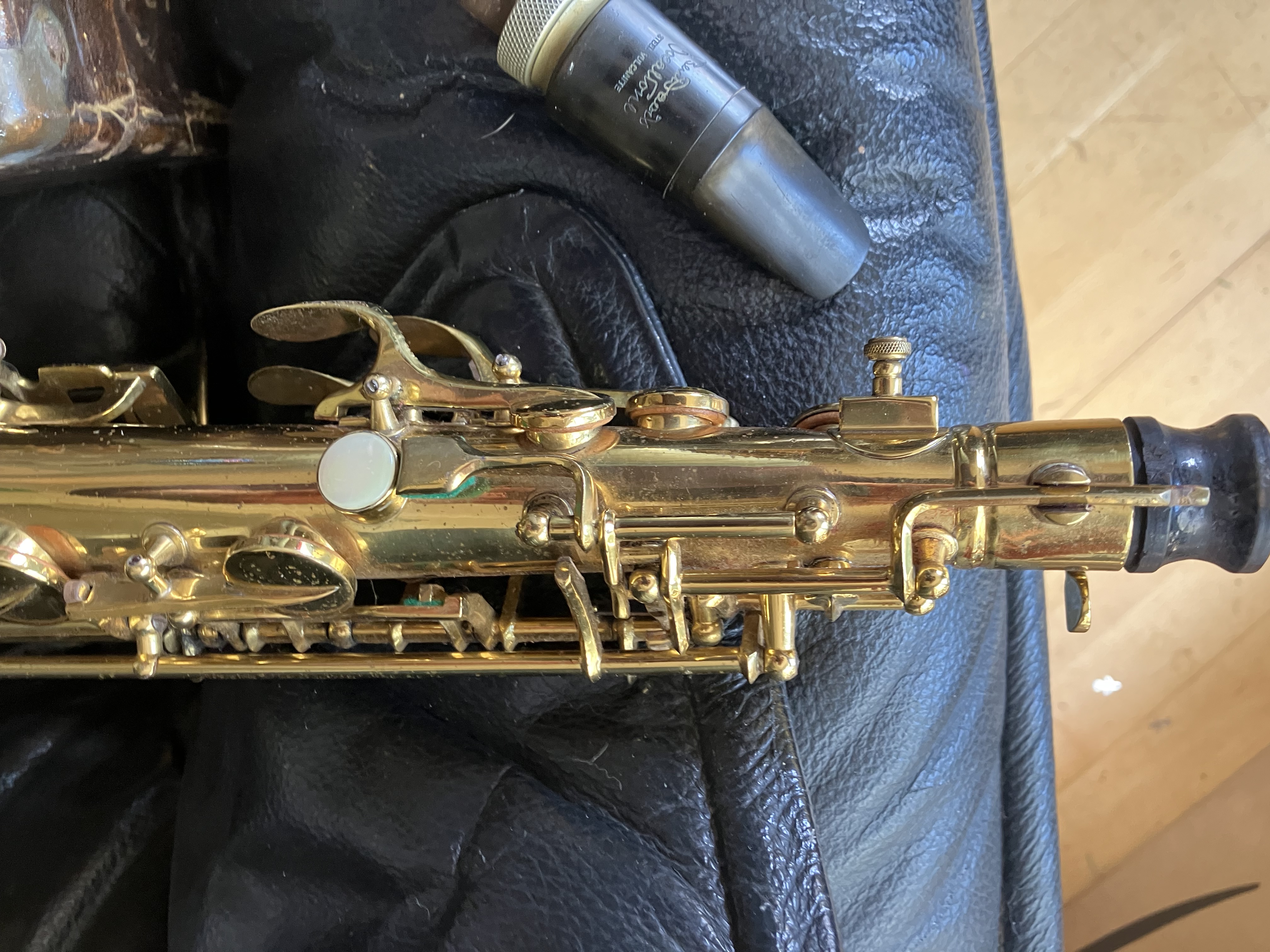
Selmer UK’s business grew rapidly forcing a move from a floor of 106 Charing Cross Road to Moor Street around 1935… and continued, forcing a move to 114-116 Charing Cross Road in 1937. My case therefore – and by assumption the saxophone inside it – dates to this two-year period. The metal at the bottom of the mouthpiece is not a micro-tuner. The Ben Davis Vocaltone Steel Vulcanite mouthpiece on it is firmly attached to the crook, but the metal at the bottom is not a micro-tuner. I expect it has accompanied the instrument from the offset.
The Instrument
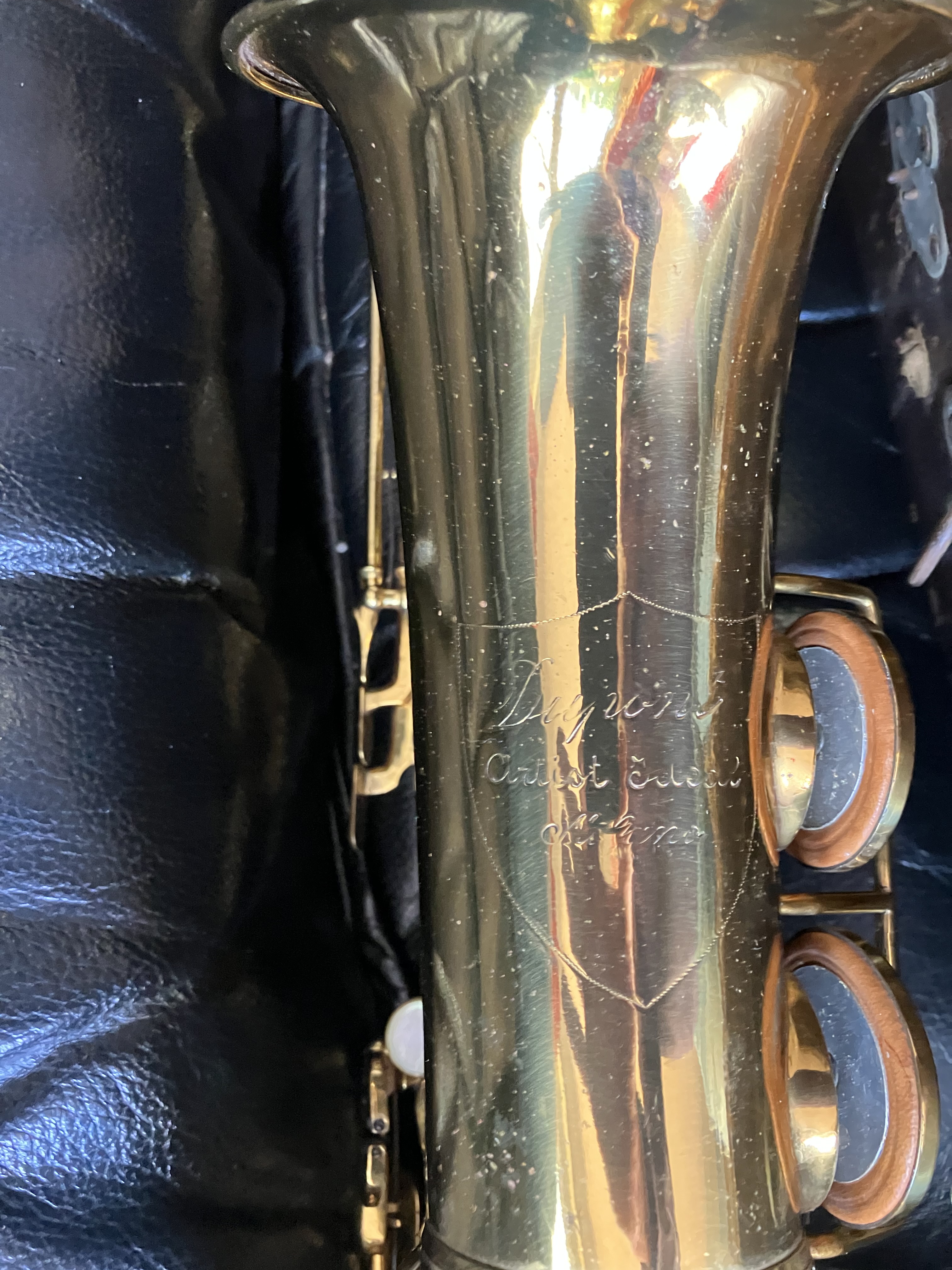
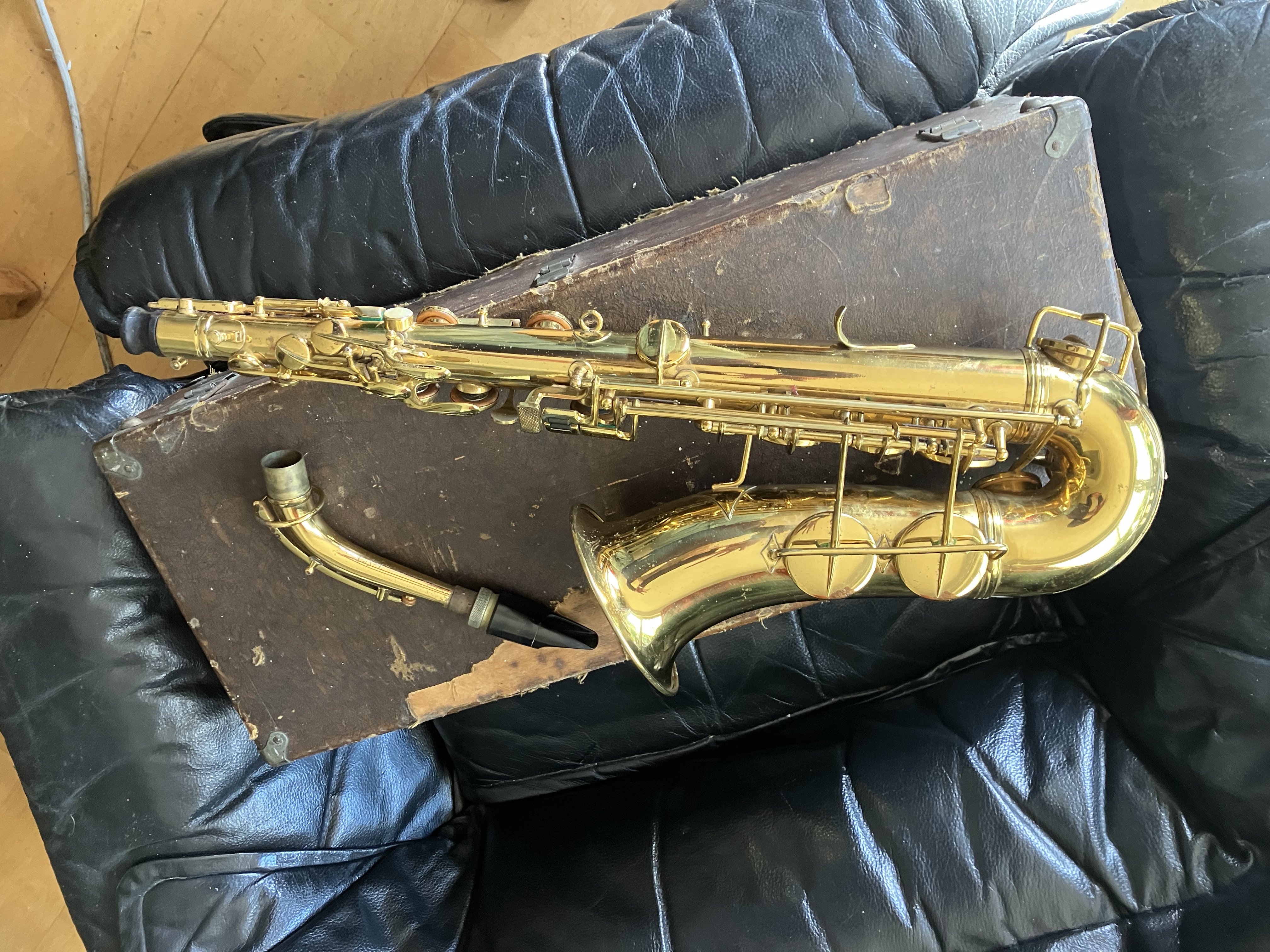
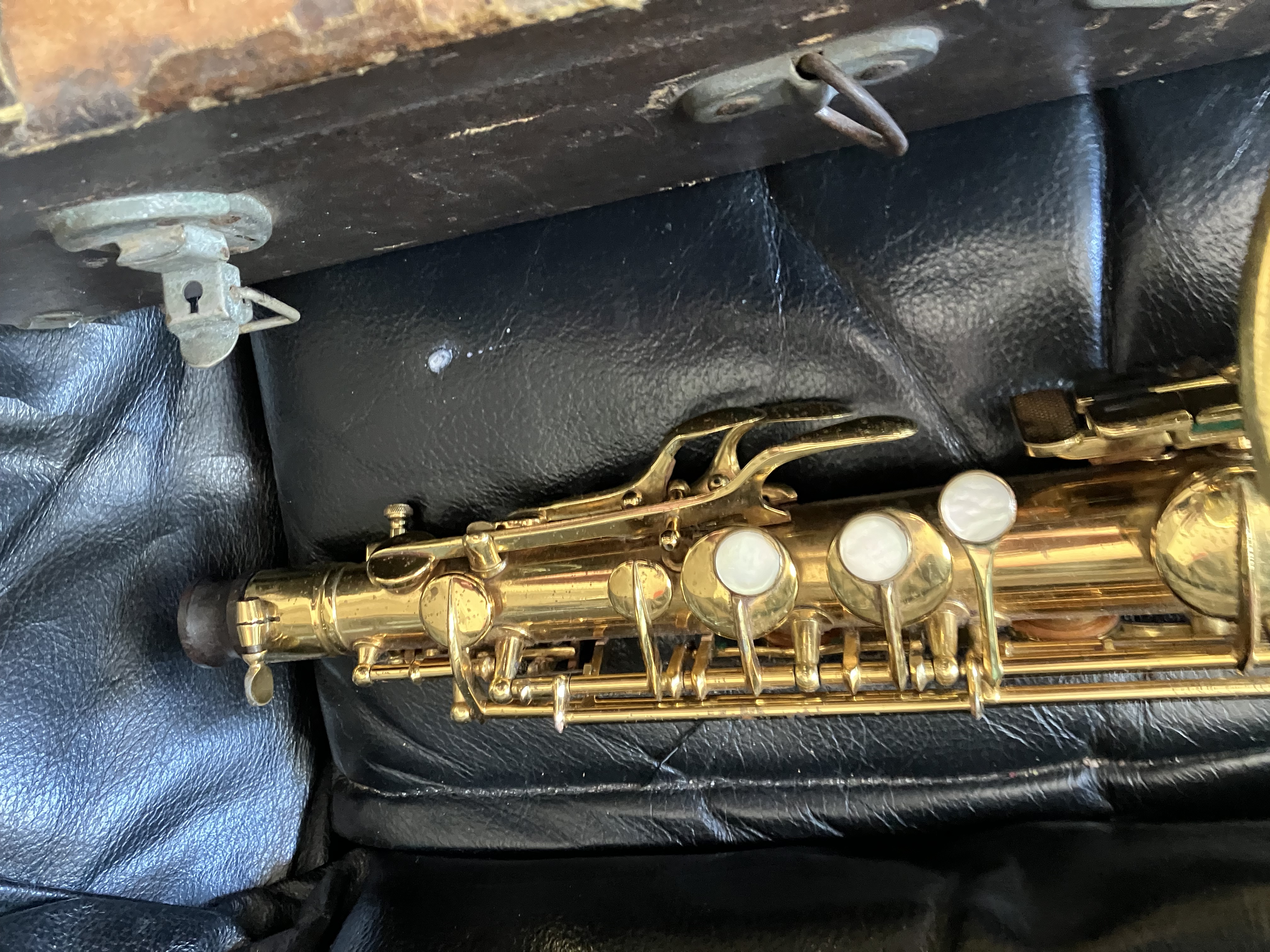
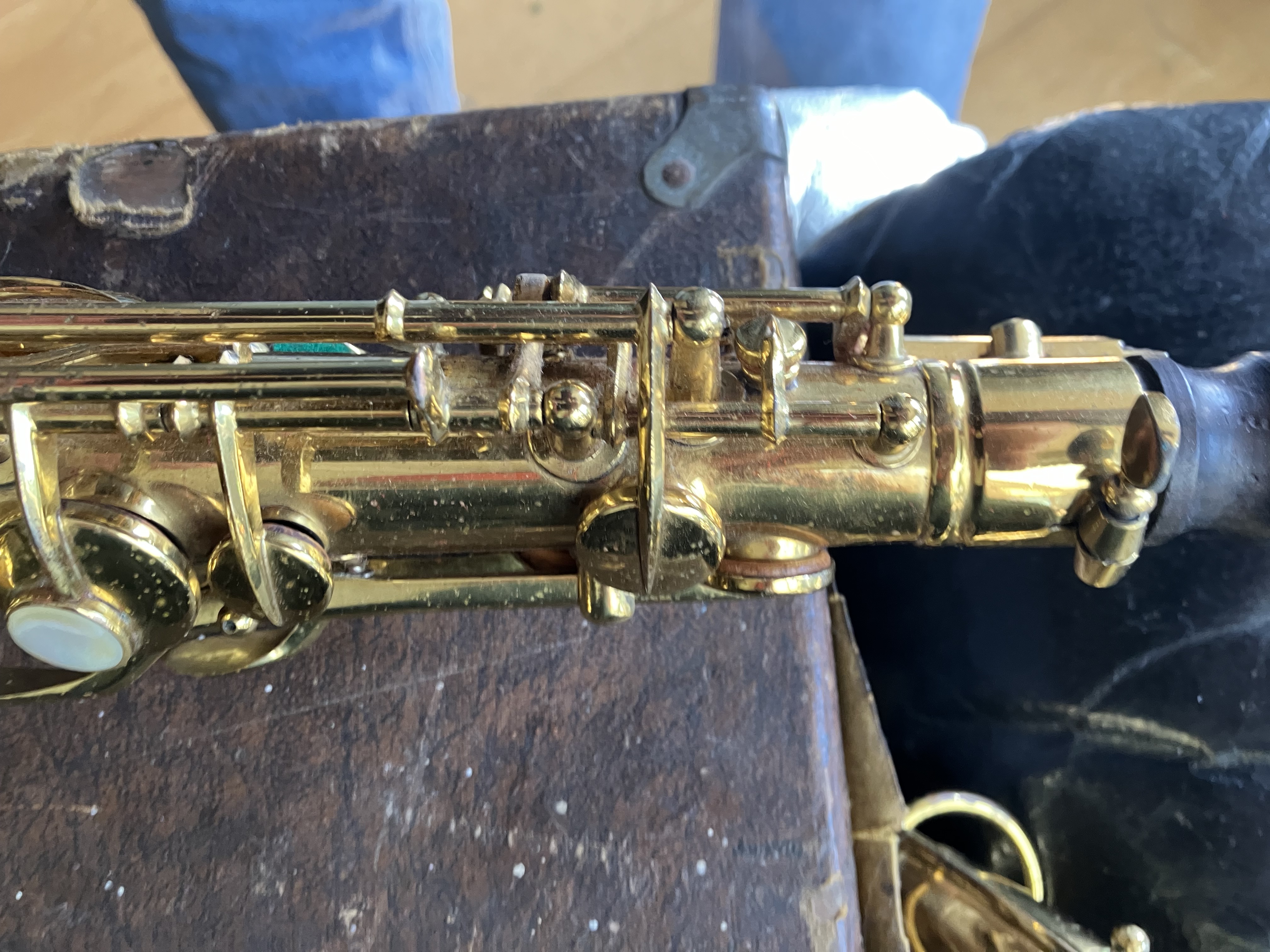
It has a Selmer ‘cigar cutter’ octave mechanism and Conn Chu Berry ‘nailfile’ G# – typical design features on European made saxophones of the time. It has a low Bb, but no middle Bb/A# key (sometimes referred to as Bis). If has both ‘Milano’ and ‘made in Italy’ stamped on the Bell and lower back respectively. I’ve guessed it was made by Orsi, although it could have been made by another Milan based maker such as Botali-Roth-Pelitti. During my research I found photos of a similar Dupont Artist Ideal tenor, but alas with no further description.
The missing Bb key maybe an indication that this was made as a as “ministeriale” instrument, designed to be played by military or police bands – a bit scary considering that Italy at the time had a fascist overnment under Mussolini.
It’s finished in a gold lacquer – slightly lighter on the bell and its faded engraving suggests it’s been relaquered at some stage. Otherwise it shows little sign of wear. I suspect it hasn’t been played much in recent decades; perhaps not since the owner bought the Tommy Dorsey Saxophone Method included in the case and dated from 1940… or the ancient reeds still in the box.
The Player
It makes a beautiful silky tone when blown with the Ben Davis mouthpiece – suprisingly loud and balanced from top to bottom. I doubt whether I will ever play it ‘out’, but might use it for recording – especially when looking for an authentic 1930s sound. The real challenge will be trying my right hand for playing the missing Bb!
Saxifications
- Make – Dupont (Orsi)
- Model – Artist Ideal
- Serial Number – 2126
- Date of Manufacture – 1936
- Place of Manufacture – Milan, Italy
- Finish – Gold laquer
- Weight – 2.0 kg
- Sound – Rich, colourful
- Ease of Blowing – Moderate, lots of adjustment needed from low to high
- Ease of Fingering – Clunky and needs alternative fingering for left-hand Bb
Do you own a similar Orsi saxophone? If you can write a few lines and supply a few photos, I’ll include your instrument here.
Filed under: Alto, Orsi, Saxophone Reviews | Tagged: alto saxophone, Dupont Artist Ideal, Orsi, Saximus Maximus |
 Saximus Maximus
Hi Martin, I’ve got a Dupont Artist Ideal tenor finished in silver. Serial number 2313, made in Italy with a nail file G#. It has the word NUMANA (a town in Italy) engraved on the bell.
I bought this horn about 20 years ago from a family of a lady in Leeds. Her husband played it during the war. It came with the original recipe from John Sheerer & Sons in Leeds in 1941 and a photo of her husband with an army band, possibly the 5th Tank Regiment concert band. Happy to send photos.
Chris – thanks very much for your comments. Provinance is important for musical instruments. The case is a good place to put copies of photos, invoices, guarantees, etc. I wish I knew who originally owned the instruments I have. Best wishes Martin